

Per approfondire ...
In questa sezione propongo la lettura di argomenti nell'area del rod building Internazionale e non solo.
Articoli
Gary Loomis talks about rod breakage by Trey Kistler

Hey guys,
With all this talk of some of the newer rods getting bad raps for breaking, I looked around and found a very interesting article by G. Loomis on the subject. Enjoy:
Ever since the introduction of the first graphite rod by Fenwick in 1974, myths about this mysterious material have been growing and circulating the globe like wildfire. How many times have you
been told that the difference between IM6, IM7 and IM8 is the difference in quality standard, or that the higher the modulus, the more graphite was used to produce the rod?
With there being so many misconceptions surrounding this material, Gary Loomis – one of the world’s foremost authorities on graphite rod design and founder of the G.Loomis Corp. – agreed to lend
his expertise to eliminate these myths.
per continuare la lettura .......... https://kistlerrods.com/blogs/kistler-news/gary-loomis-talks-about-rod-breakage
Why buy a handcrafted rod? by Jerald Horst

For some anglers a fishing rod is just a fishing rod. Their selection process is simple: They go into a store, pick up a rod without a reel and without any weight to load the tip and whip it up and down.
Others do more.
Lance Dupre of Swampland Tackle in Houma visibly cringed when he described what some anglers do.
“I’ve seen fishermen in tackle shops take the tip of the rod and see how far they can bend the tip back toward the butt,” Dupre said.
I had a whole afternoon to pick Dupre’s brain about rods at his workshop behind his Houma home. I wanted to know if there really were advantages to using a handcrafted rod over a store-bought or “rack rod.”
per continuare la lettura .......... http://www.louisianasportsman.com/details.php?id=6152
Picking the Right Blank by Robert Feuring
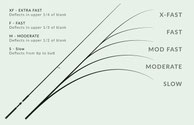
An important decision when you are rod building is to choose the ideal blank. There are a number of considerations when you choose these blanks, it is the most important part of your fishing rod. Again, this is one place where you don’t want to skimp on the equipment. Just don’t take the plunge without doing your homework.
per continuare la lettura .......... http://www.articleon.net/sports/rod-building-picking-the-right-blank/
Canne da pesca e materiali di M. Guzzinati (Ibbf-team)

Sicuramente tutti sappiamo che le nostre canne da pesca sono costituite da materiali speciali, più propriamente detti materiali compositi, ma ci siamo mai chiesti cos’è un materiale composito? Cosa stringiamo fra le mani quando peschiamo? Nel bagaglio culturale del pescatore con esche artificiali è più o meno presente il concetto di modulo, ovvero è noto che canne ad “alto modulo” sono più costose di quelle definite a “basso modulo”, ma spesso è dato per scontato. In base alla mia formazione culturale vorrei fornire i concetti sugli elementi cardine che caratterizzano la struttura delle canne da pesca, cercando di utilizzare un linguaggio semplice e comprensibile, senza dilungazioni scientifiche, che comunque sono alla base dei sofisticati progetti che vediamo realizzati all’interno dei negozi.
per continuare la lettura .......... http://www.ibbf-team.it/tecnica/materiali_canne.htm
Fishing Rod Sensitivity by Lamiglas Rods

Anglers talk about rod sensitivity a lot when discussing their favorite rods. It’s an attribute that rod buyers seek, some more than others. Sensitivity always seems to work its way into conversations about technique specific rods.
What is Sensitivity?
No, it’s not a rod crying over a lost fish.
Quite simply, sensitivity is how well you can feel a bite, or the bottom of the river through the rod. With some techniques you will be amazed at how much sensitivity makes a difference. With other techniques, it will make very little difference.
Fishing rods are so diverse in how they match up to specific fisheries. One rod may work perfectly for a certain technique, while not at all for another – even while chasing the same species. Sensitivity is not always needed, but when it is – it’s essential!
per continuare la lettura .......... https://www.lamiglas.com/blogs/lamiglas-fishing-rods-blanks/understanding-fishing-rod-sensitivity-1